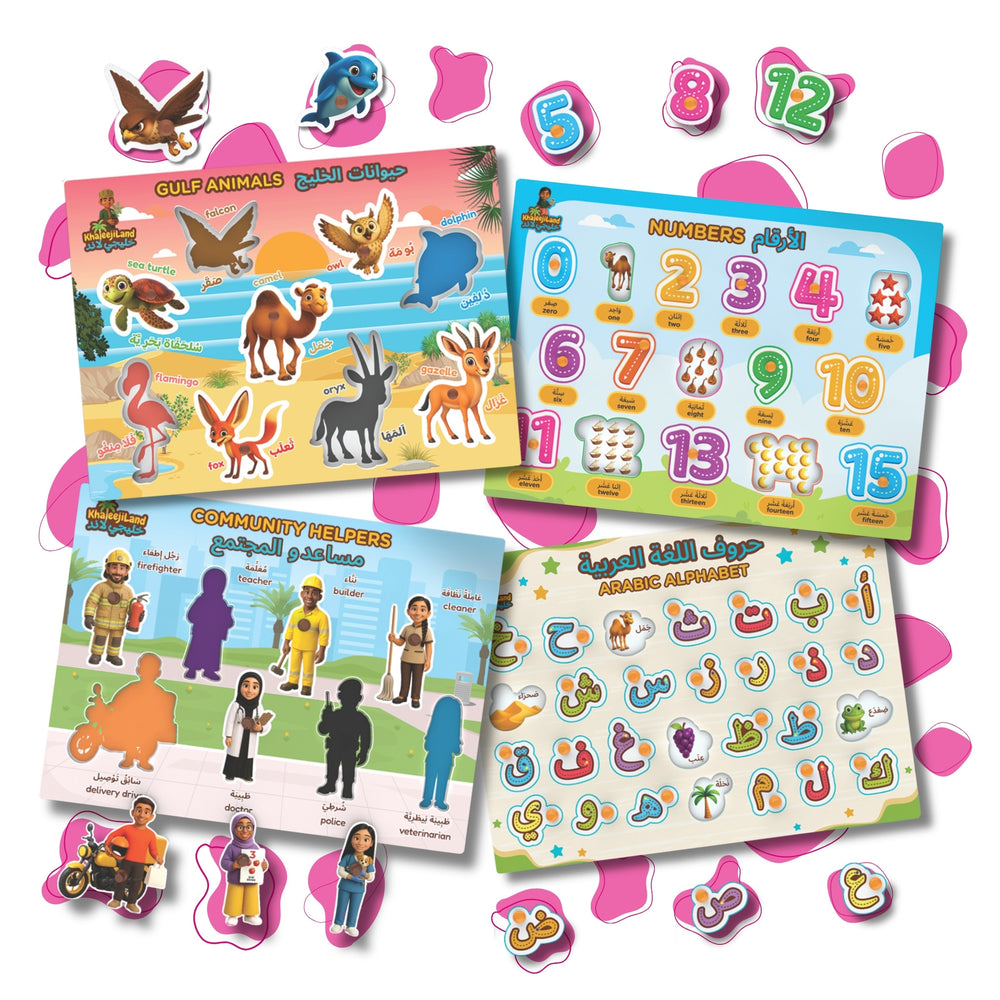


Why Cheap Educational Toys Often Aren't: What to Look For and Why Safety Certification Matters
A cheap educational toy isn't automatically a bad toy. The problem is when the low price comes from weak materials, poor finishing, missing safety testing, or unclear age guidance. If you're buying toys in the UAE, the safest approach is to check the toy's age grade, materials, finish, warnings, and conformity marking before you buy.
|
Key takeaways • “Cheap” and “inexpensive” aren't the same thing. A well-made toy at a fair price is good value; a poorly made one at any price isn't. • Price often reflects what you can't see: material quality, finish, durability, and whether the toy was properly safety tested. • In the UAE, children's toys generally fall under Gulf toy-safety conformity requirements. The G-Mark and QR code are important things to check on toys placed on the GCC market. • Relevant EN71 testing can cover hazards such as small parts, sharp edges, flammability, and migration of certain elements from paints and inks. • Five quick checks can help you avoid poor-quality, unsuitable, or unclear toys. |
Quick checklist before buying a cheap educational toy
Keep this short list in mind whether you're in a shop or scrolling a marketplace. It catches most of the problems in under a minute.
|
Check |
What to look for |
|
Age grade |
A clear age recommendation and warning labels |
|
Safety mark |
G-Mark / GCTS where required for toys on the GCC market |
|
Materials |
A stated material, not vague “safe material” wording |
|
Finish |
Smooth edges, no peeling paint, no loose parts |
|
Learning value |
One clear skill, concept, or play purpose |
Most of us have bought the cheap toy at some point. The one on the shelf that costs a fraction of the others, looks close enough, and feels like a sensible choice when a child will probably lose interest in a week anyway. Sometimes it works out fine. Often it doesn't, and the reasons are worth understanding before you spend money again.
When we started sourcing the first KhaleejiLand range, I treated the process less like shopping and more like supplier due diligence. My audit background kicked in: ask for the paperwork, check the samples, then see whether the product actually matches what is being claimed. What surprised me was how often two toys could look similar in a photo but feel completely different in hand. That is why I'm careful about what I recommend, including when the honest answer is that a KhaleejiLand product isn't the right fit.
What “cheap” really means for a toy
When a toy is unusually cheap, the saving has to come from somewhere. It rarely comes from the part you can see in the listing photo. It usually comes from the parts you can't: the grade of the materials, the quality of the finish, the strength of the joints, and whether the product was properly tested for safety before it was sold.
A useful distinction is between cheap and inexpensive. An inexpensive toy is well made and sold at a fair price, often because it's simple. A cheap toy is one where corners were cut to hit a price point. A basic wooden puzzle can be excellent value at a modest price. A flimsy one at the same price isn't a bargain, it's less money for less toy, and sometimes for a hazard.
Where the savings usually hide:
• Materials. Lower-grade wood or plastic, thinner board, or unspecified plastics that haven't been checked for what they contain.
• Finish and inks. Cheaper paints and coatings that chip, fade, or were never tested for heavy metals.
• Construction. Weak glue, loose pegs, or parts that come apart with normal use and become a choking risk.
• Testing. The single biggest hidden cost. Proper safety testing and certification are expensive, and skipping them is the easiest way to make a toy cheaper.
Why safety testing affects the price
Testing a toy properly isn't a formality. It's laboratory work, and it's one of the larger costs in bringing a toy to market. That's why uncertified toys can be sold so cheaply: the seller may have skipped a real expense, and the buyer has less assurance about the product.
Many toys are tested against relevant parts of EN71, the European toy-safety standard series commonly used for toy safety testing. EN71 comes in several parts, and three matter most for the toys young children use every day: Part 1 covers mechanical and physical properties, such as small parts, sharp edges, and strength; Part 2 covers flammability; and Part 3 covers the migration of certain elements, meaning heavy metals such as lead and cadmium leaching out of paints, coatings, and inks. You can see the structure of the standard in the published EN71-1 mechanical and physical properties standard.
In plain terms, that testing answers the questions every parent worries about. Can a child pull off a piece small enough to swallow? Will an edge cut them? Will the toy catch fire easily? Is there anything harmful in the paint they'll inevitably put in their mouth? A certificate is how a manufacturer proves the answers, rather than just asserting them.
The first proper testing quote was a bit of a cold shower. On a small production run, certification doesn't quietly disappear into the background; it shows up in the unit cost. That experience changed how I look at very cheap toys. Sometimes they're good value. Other times, the saving is coming from somewhere you'd rather not compromise.
What UAE parents should check on a toy
Toy safety in the UAE isn't only a brand promise; it sits within a GCC conformity framework. Since 1 January 2014, the Gulf Technical Regulation on Children's Toys has set agreed safety requirements for toys placed on the GCC market. For children's toys sold here, the G-Mark and the GSO Conformity Tracking Symbol (a G-Mark shown with a QR code) are key things to look for, where applicable. Children's toys placed on the GCC market generally fall under this regulation and require the relevant Gulf conformity route, including the G-Mark and GCTS where applicable. You can read the official requirements in the GSO guidance document on the children's toys regulation.
The practical point for a parent is short. The G-Mark and its QR code are the clearest at-a-glance signal that a toy has been through proper assessment. If you scan the code and nothing sensible comes up, or the mark is absent on a toy meant for young children, treat that as a reason to pause.
A quick word on age grades. Age grades aren't marketing. A “not suitable for children under 3” warning usually means the toy contains small parts. Match the toy to your child, not to the child you hope they'll be next year. And when you can handle a toy, feel the edges and tug gently on any removable parts: smooth edges, snug pegs, and a solid board are signs of a toy that will survive a toddler.
What an educational toy should do. A useful educational toy should give the child something meaningful to do: solve, build, sort, count, name, pretend, compare, create, or practise. If you can't say what a child does with it or learns from it, the low price isn't the problem.
Cheap versus well made: the same toy isn't the same toy
Two wooden puzzles can look almost identical in a photo and behave very differently in a child's hands. Here's where the real differences tend to show up.
|
What you compare |
A cheap version |
A well-made version |
|
Materials |
Thin or unspecified board; plastics of unknown content |
Stated materials, e.g. engineered wood and non-toxic inks |
|
Finish and inks |
Chips and fades; heavy metals not verified |
Smooth, durable, tested against EN71 Part 3 |
|
Pieces and pegs |
Loose or fragile; can break into small parts |
Snug, solid, sized and tested for the age grade |
|
Safety testing |
Unclear, missing, or not stated |
EN71 tested, GSO certified, carries the G-Mark and QR code |
|
Real cost |
May break quickly, be returned, or be unsuitable |
Lasts, gets handed down, does the job |
FROM OUR RANGE: THE WOODEN PEG PUZZLES
|

When is it worth paying more for an educational toy?
It's worth paying more when the toy will be used repeatedly, has proper safety documentation, is made from better materials, suits the child's current stage, and gives adults something useful to do with the child. It isn't worth paying more just because the box looks premium.
When cheap is fine
None of this means you should always buy the most expensive toy, or always buy ours. Plenty of inexpensive toys are excellent, and plenty of expensive ones aren't. Price is a clue, not a verdict. Children don't need a large collection. They need a few good things they return to, and a lot of unstructured time to use them.
Cheap is fine when:
• the toy is age-appropriate
• the materials are clear
• it has the required safety information
• it supports simple, repeatable play
• you're testing a child's interest in a theme
• it isn't pretending to be more educational than it is
Buying a gift? If you're buying for a child and you're not sure what they already have, choose safer, simpler, and better made over bigger and flashier. It's the choice that ages best.
ONE TOY THAT EARNS ITS PLACE
If you're choosing one toy that earns its place, look for repeated use. KhaleejiCash UAE is a good example from our range, because it supports counting, sorting, pretend shopping, and early money conversations using UAE currency children can recognise. The value isn't in being fancy; it's in being used again and again. |

Try before you spend
One of the best ways to judge whether a toy will hold a child's interest is to see how they take to the kind of play it offers, before you buy anything. Our free Activity Library is a no-cost way to do this, and the activities work on their own without any product. Print one, set it out, and watch what your child enjoys. It's a simple way to see what works before buying another toy.
Frequently asked questions
Are expensive toys always better than cheap ones?
No. Price is a signal, not a guarantee. A well-made toy at a fair price is better value than an overpriced one, and a simple inexpensive toy can be excellent. What matters is whether the toy is well made, age-appropriate, and properly safety tested, not the size of the price tag.
What does the G-Mark on a toy mean in the UAE?
The G-Mark, shown with a QR code, indicates that a toy has been assessed under the Gulf Technical Regulation on Children's Toys for sale on the GCC market. It applies to children's toys where required. Scanning the QR code links to the conformity record, which is why an absent mark on a children's toy is a reason to be cautious.
What is EN71 toy safety testing?
EN71 is the European toy-safety standard series, used widely for toy safety testing. Its key parts cover mechanical and physical hazards such as small parts and sharp edges, flammability, and the migration of certain elements from paints and inks. An EN71 test report is how a manufacturer shows a toy has been checked for the hazards that matter most to young children.
Can I trust cheap toys on UAE marketplaces?
Sometimes, but don't rely on price, photos, or high ratings alone. Check the age label, safety warnings, material details, seller information, and whether the toy shows the required conformity marking for the market. A listing that omits these is telling you something by its silence.
|
Madhav is the co-founder of KhaleejiLand. He grew up at the intersection of Emirati and expat life, and would not have it any other way. That experience is why KhaleejiLand exists: so children grow up genuinely connected to the place they call home. |


