

Beyond National Day: What UAE National Identity Looks Like in Education
In UAE schools, national identity is taught throughout the year, not only around National Day. It runs through Moral, Social and Cultural Studies, Arabic lessons, and everyday school culture. Dedicated programmes such as Abu Dhabi's National Identity Mark add to it, and Muslim students also study Islamic Education. Together, these build children's sense of belonging and heritage.
|
Key takeaways • National identity is part of UAE education all year, not just a National Day event. • It is built into the Ministry of Education's Moral, Social and Cultural Studies curriculum, taught across UAE schools, including to expatriate students. • In Abu Dhabi, ADEK can evaluate private schools on how they deliver their national identity programmes, through the National Identity Mark. • The UAE National Identity Strategy sets a roadmap to 2031 for strengthening national identity, including in education and family life. • Parents can support this at home through language, places, symbols, and culturally relevant play. |
Why national identity is more than a once-a-year celebration
Every December, UAE schools fill with flags, traditional dress, and projects for Eid Al Etihad, often still called UAE National Day by families and schools. I took part in all of it through my own school years here. But national identity at school was never a once-a-year occasion. It runs through the whole year: the lessons, the daily routines, and the way children come to understand the country they live in.
National Day itself is a public holiday, so the school celebrations always happened in the days before it: the assemblies, the flag colours worn on everyone's clothes, the classrooms decorated in red, green, white, and black. Those were the parts you could photograph. What I noticed only later was the quieter side that ran all year, the Arabic classes and the social studies lessons teaching the same sense of place, just without the decorations.
The country has been formalising this further. In late 2025 the government launched the UAE National Identity Strategy, a roadmap to 2031 for strengthening Emirati national identity. Education is one of seven areas it works through, alongside family, language, media, and the economy. It's a long-term plan rather than an overnight change to the timetable, so don't expect your child's lessons to look too different next term because of it.
How national identity is taught in the UAE curriculum
Most of this learning happens through a Ministry of Education subject called Moral, Social and Cultural Studies, often shortened to MSC, taught across UAE schools, including to expatriate students. The Moral Education programme is built around four pillars: Character and Morality, the Individual and the Community, Civic Studies, and Cultural Studies. Arabic lessons sit alongside it, and for Muslim students so does Islamic Education.
How it's delivered depends on the school and the child. Emirati and other Arab students usually take Moral Education and UAE Social Studies as separate subjects, while non-Arab students often have them combined into MSC. In Dubai, private schools are required to teach UAE Social Studies and Moral Education in line with Ministry guidance, whatever wider curriculum they follow.
All of this sits in the normal timetable, taught and assessed like maths or science, and it carries on throughout the year.
What is the National Identity Mark?
In Abu Dhabi, private schools can now be evaluated on how they deliver national identity programmes. In 2023, ADEK (the Abu Dhabi Department of Education and Knowledge) introduced the National Identity Mark, an annual rating that assesses schools across three domains: Culture (history, heritage, and Arabic language), Values (respect, compassion, and global understanding), and Citizenship (belonging, volunteering, and conservation). Schools are rated on a four-level scale, from Outstanding down to Weak.
The Mark first prioritised schools with the highest number of Emirati students, and schools without Emirati enrolment can ask to be evaluated if they run programmes that immerse expatriate students in the country's heritage. If you're choosing a school in Abu Dhabi, it's a useful signal to check, and it sits separately from the academic inspection results most parents already look at.
Does this apply to expat children too?
Yes. The curriculum reaches children across UAE schools, including expatriate students, and for an expat child the aim isn't to replace their own background. It's to help them feel at home in the country they're growing up in.
What does this mean for parents of children aged 3 to 8?
School handles the formal side: the lessons, the subjects, the assessment. Your part is the everyday version that helps it stick. At this age, that means simple Arabic words, outings to local places, bedtime stories, songs, and plenty of play. For expat families, the goal is respectful connection, helping your child feel at home here, without setting aside the background and heritage you've brought with you.
How parents can support national identity at home
None of this needs to be formal. A few simple things that work well at home:
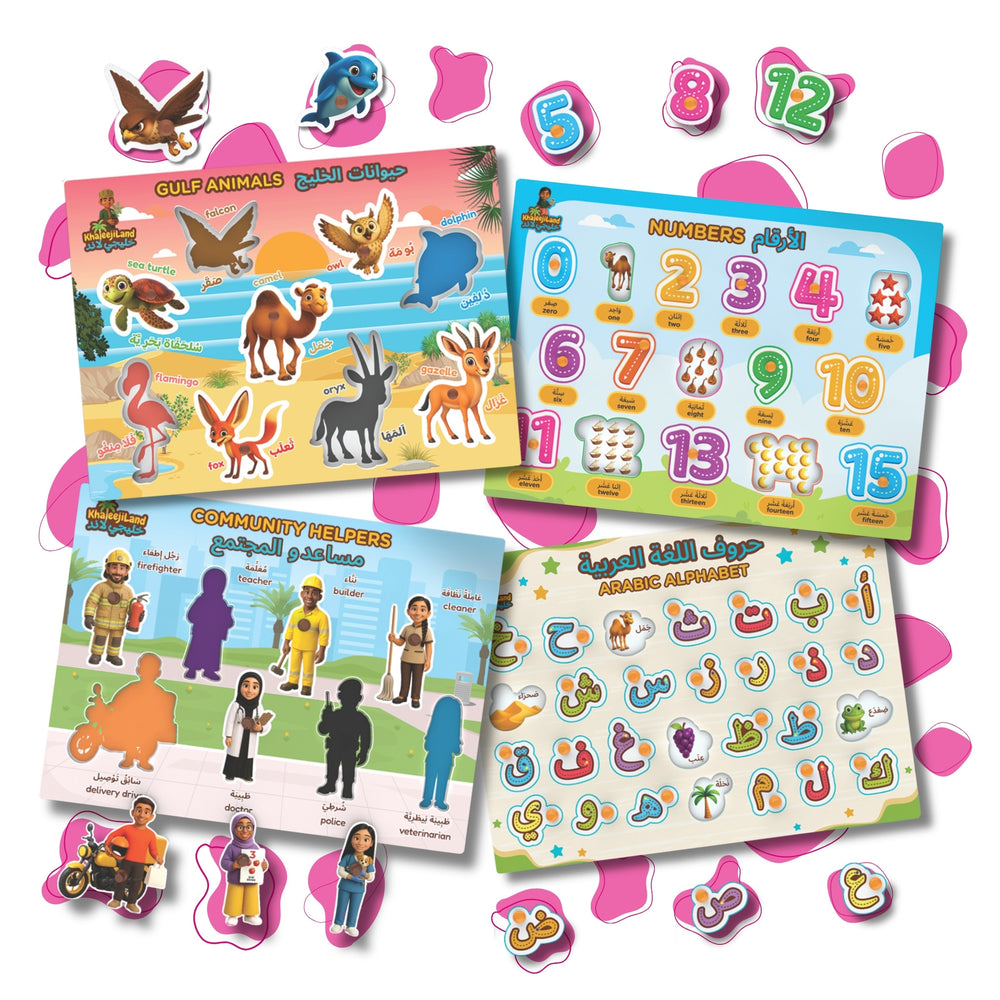
• Use the Arabic names for things your child already knows: numbers, colours, animals, family members.
• Explore the country. Each of the seven Emirates has its own character, and a weekend at a fort, a souk, or a wadi can make the learning feel real.
• Learn national and cultural symbols together: the flag, the falcon, the Arabian oryx, the camel, the ghaf tree.
• Talk about the values your child already sees around them, like hospitality and respect for elders, and name them as part of how this place works.
• Choose books, toys, and activities that show the Gulf, so the images and stories around your child reflect the world outside the window.
I do a version of this with my niece and nephew, who are eight and five. When we meet up, we'll usually turn the day into a small adventure: a fort one weekend, the mangroves the next, a farm or a museum the time after. By last winter, the eight-year-old could tell me which emirate we'd crossed into before I could.
For young children, culture becomes easier to understand when it is connected to real places, familiar words, family routines, and hands-on play.
FROM THE KHALEEJILAND SHOP
|
|
WANT A PLACE TO START? Our free Activity Library has printable activities that bring UAE places, symbols, and language into everyday play. Everything there is free to download. |

Frequently asked questions
Is Moral Education compulsory in UAE schools?
Yes. Moral Education is a Ministry of Education requirement and is taught across UAE schools, including to expatriate students, often as part of a combined subject called Moral, Social and Cultural Studies. Schools plan and assess it like any other subject.
Do expat children study UAE national identity and Arabic?
They do. Arabic is a required subject in UAE schools, and national identity content is taught across the school system, including to expatriate students. For expat families the aim is connection and belonging, not a replacement for the child's own background. (Islamic Education applies to Muslim students.)
What is the ADEK National Identity Mark?
It's an annual rating introduced by Abu Dhabi's education regulator in 2023 that evaluates how well private schools deliver their national identity programmes. Schools are assessed across three domains, Culture, Values, and Citizenship, and rated from Outstanding to Weak.
At what age should children start learning about UAE culture?
Children can start very young, as long as it is age-appropriate. For preschool and early primary children, this usually means simple Arabic words, stories, songs, maps, outings, pretend play, puzzles, and noticing familiar symbols in everyday life.
|
Madhav is the co-founder of KhaleejiLand. He grew up at the intersection of Emirati and expat life, and would not have it any other way. That experience is why KhaleejiLand exists: so children grow up genuinely connected to the place they call home. |


