

أكثر من كلمات: كيف تدعم الصور والرموز التعلّم ثنائي اللغة
الدعائم البصرية صور ورموز وإيماءات وأشياء حقيقية تُقرَن بالكلمات لتوضيح المعنى. وللأطفال ثنائيي اللغة، تستطيع صورة واحدة أن تمنح العربية والإنجليزية مرساةً مشتركة. فيربط الطفل "apple" و"تُفّاحة" بالشيء أو الصورة نفسها، بدل الاعتماد على الترجمة وحدها.
|
أبرز النقاط
|
ما الدعائم البصرية، ولماذا تعين الأطفال ثنائيي اللغة؟
الدعامة البصرية أي شيء تراه ويحمل معنى إلى جانب كلمة: صورة فوتوغرافية، أو رسم، أو رمز، أو إيماءة، أو الشيء الحقيقي نفسه. ونحن نستعملها طوال اليوم أصلًا: زرّ المصعد، ولافتة الحمّام في المركز التجاري، والصورة على علبة الحبوب، والصورة على سلّة الألعاب. لا شيء من هذه يحتاج ترجمة. ولهذا تهمّ كثيرًا لطفل يتعلّم لغتين في آن.
حين يكون الطفل أحادي اللغة، تتعلّق الكلمة الجديدة بمعنى قد يحمله أصلًا. أمّا حين يكون ثنائي اللغة، فكثيرًا ما يبني تسميتين لفكرة واحدة. فإن كان الطريق الوحيد إلى الكلمة العربية يمرّ عبر الإنجليزية، فالطفل يؤدّي عملين: تذكّر الكلمة، وترجمتها. والصورة تستطيع تقليص تلك الخطوة الوسطى. فالصورة تحمل المعنى، وتستطيع "duck" و"بَطّة" التعلّق بها مباشرةً. ومع الوقت، يبدأ الطفل بربط كل لغة مباشرةً بالشيء أو الفكرة. وللآباء الذين يستعملون العربية والإنجليزية في البيت، تستطيع الدعائم البصرية جعل المفردات الجديدة أيسر رؤيةً وسماعًا وتكرارًا واستعمالًا.
وهذا أيضًا سبب معونة الدعائم البصرية في البيوت التي لا يتشارك فيها الوالد والطفل لغةً أولى بثقة بعد. فالوالد الذي ما زال يبني عربيته يستطيع الإشارة إلى صورة أو شيء، وقول الكلمة، والتعلّم إلى جانب الطفل. فالصورة تدعم المعنى بينما ينمذج البالغ الكلمة.
ماذا يقول البحث عن قرن الكلمات بالصور؟
فكرة أن الصور تقوّي التعلّم ليست جديدة ولا غير مثبتة. فالبحث في التعلّم المتعدّد الوسائط يدعم فكرة أن الكلمات والصور تعمل أفضل معًا من الكلمات وحدها، خاصّةً حين تكون الصورة والكلمة مترابطتين بوضوح والصفحة غير مزدحمة. فالكلمة التي تسمعها فقط تترك أثرًا واحدًا. والكلمة التي تسمعها وترى لها صورة أيضًا تترك أثرين، ويستطيع الاثنان أن يعزّز أحدهما الآخر. وللآباء، الخلاصة العملية بسيطة: اقرن صورة أو شيئًا واحدًا واضحًا بكلمة واحدة مفيدة، ثم استعملها في تفاعل حقيقي.
ولا يعني هذا أن كل صورة تساعد. فالصور الزخرفية أو المزدحمة قد تشتّت. والصورة المفيدة هي التي تدعم بوضوح الكلمة أو الفكرة التي تُعلَّم.
وكثيرًا ما توصي الإرشادات لمتعلّمي اللغتين الصغار باستعمال إشارات ملموسة كالصور والإيماءات والأشياء والمواد المألوفة إلى جانب اللغة. وفي بيئة البيت، يعني ذلك أن تدعم الدعائم البصرية التفاعل الحقيقي لا أن تحلّ محلّه. (الأكاديميات الوطنية، تعزيز النجاح التعليمي للأطفال والشباب الذين يتعلّمون الإنجليزية)
حين عملت مع الأطفال في مدارس أبوظبي، استعملت الصور باستمرار لأنها أعانت الأطفال على المشاركة قبل أن تكون لديهم كل الكلمات. فإن كنّا نتعلّم كلمات الطعام، منحت صورة واضحة لتفّاحة أو كوب الجميعَ نقطة البداية نفسها. سمّاها بعض الأطفال بالإنجليزية أولًا، وبعضهم بالعربية، وبعضهم أشار فقط. أعانتنا الصورة على البدء من معنى مشترك.
هل تعين الدعائم البصرية ذوي الاحتياجات الإضافية فقط؟
كثير من أشهر برامج الدعم البصري يأتي من عالم التربية الخاصة والتواصل، وقد يعطي ذلك انطباعًا بأن هذه الأدوات للأطفال الذين يكافحون فقط. وليست كذلك.
كثير من العائلات تسمع بالدعائم البصرية أولًا عبر التربية الخاصة، أو علاج النطق واللغة، أو دعم التوحّد. وهي أساسية لبعض الأطفال، لكن الفكرة الأساسية مفيدة على نطاق أوسع بكثير. فكثير من الأطفال يتذكّرون الكلمات الجديدة أيسر حين تُقرَن الكلمة بصورة أو شيء أو إيماءة أو فعل واضح، وأي طفل يتعلّم لغتين يستفيد من مرساة لا تنتمي إلى أيّ من اللغتين. فالجدول الزمني البصري يعين طفلًا توحّديًّا على فهم ما يحدث تاليًا؛ ويعين أيضًا ابن الثالثة الذي يجد الصباح أيسر ببساطة حين يرى ما يحدث تاليًا. الأداة نفسها. والحاجة مشتركة على نطاق أوسع ممّا يفترض الناس.
وما أصابته التربية الخاصة، وأصابته مبكرًا، هو انضباط إبقاء الدعامة البصرية واضحة. فكرة واحدة لكل صورة. لا ازدحام. صورة نظيفة يقرأها الطفل بلمحة. وذلك الانضباط هو ما يجعل الدعامة البصرية تنجح لأي متعلّم، بأي لغة.
ما الأدوات التي يستطيع الآباء والمعلّمون استعمالها لصنع دعائم بصرية؟
تستطيع فعل الكثير بلا شيء سوى ما في بيتك أصلًا، وسأبدأ دائمًا من هناك قبل شراء أي شيء. فالأشياء الحقيقية، وصور العائلة، وبضعة ملصقات مرسومة أو مطبوعة تُلصَق على الثلّاجة وصندوق الألعاب وباب غرفة النوم، ستعلّم أكثر من أي تطبيق، لأن الطفل يلتقيها في الحياة الواقعية طوال اليوم.
وقد تستعمل المدارس والمعالجون أدوات رموز مثل ويدجيت، أو إن برنت، أو بوردميكر. وقد تكون مفيدة، لكن معظم العائلات لا تحتاج إلى برامج مدفوعة للبدء. ففي البيت، الصور الحقيقية والملصقات البسيطة تكفي عادةً. وإن أردت شيئًا مطبوعًا متّسقًا، تتيح أدوات مجانية مثل كونيكت أبيليتي، وهي منظّمة كندية غير ربحية، وكانفا، ذات الطبقة المجانية الكبيرة، لأي والد تصميم بطاقة نظيفة بصورة واضحة وكلمة واحدة بالخطّين. وبعض الأدوات المستعملة في المدارس وبيئات العلاج متاحة أيضًا للعائلات.
وللملصقات العربية، أبقِ الخطّ كبيرًا واضحًا مدقّقًا. وتجنّب الخطوط الزخرفية للمتعلّمين المبكرين، لأن الأطفال يحتاجون إلى رؤية أشكال الحروف بوضوح.
وأهمّ نقطة ليست أي أداة تختار. بل المبدأ وراءها جميعًا: صورة واحدة واضحة، وكلمة واحدة، معروضتان معًا، بتكرار كافٍ ليلتقيهما الطفل طبيعيًّا. فصورة مطبوعة ملصقة على رفّ الألعاب تتبع ذلك المبدأ. وكذلك أداة مدرسية مدفوعة. ابدأ بما لديك.
كيف أستعمل الدعائم البصرية جيّدًا في البيت؟
بضع عادات بسيطة تصنع الفرق بين دعائم بصرية تنجح وأخرى تصير ورق جدران:
- ضع ملصقات على العالم الحقيقي. ضع بطاقة بصورة وكلمتين على الأشياء التي يستعملها الطفل يوميًّا: الباب (باب)، والكوب (كوب)، والسرير (سرير). فالتماس اليومي هو ما يجعل المفردات تلتصق.
- أبقِها فكرة واحدة. كلمة واحدة، صورة واحدة، بطاقة واحدة. فالصفحة المشغولة الموزّعة على صور كثيرة تطلب من الطفل استنباط أين ينظر قبل أن يتعلّم أي شيء.
- اقرن الصورة بالشيء والكلمة معًا. أمسك التفّاحة، وأرِ الصورة، وقل الكلمة باللغتين. فالثلاثة معًا أقوى من أي واحد وحده.
- دع الصورة تحمل المعنى، لا الترجمة. أشِر إلى الصورة وسمّها بكل لغة على حدة. وتجنّب "apple تعني تُفّاحة". فأنت تريد ربط كل كلمة بالتفّاحة، لا بالكلمة الأخرى.
- دوّرها. حين يُتقَن طقم ملصقات ولا ينظر إليه الطفل، بدّل بجديد. فالدعائم البصرية تؤدّي عملها ثم تتنحّى.
وإليك مرجعًا سريعًا لأنواع الدعم البصري التي تستطيع استعمالها وكيف تُشغِّل كلًّا منها:
|
الدعامة البصرية |
مثال |
كيف تستعملها |
|
شيء حقيقي |
كوب، تفّاحة، حذاء |
أمسكه، وسمّه بالعربية والإنجليزية، ثم استعمله طبيعيًّا |
|
صورة فوتوغرافية |
سرير الطفل أو صندوق ألعابه |
أضف ملصقًا بسيطًا وأشِر إليه أثناء الروتين |
|
بطاقة صورة |
حيوان، طعام، لباس |
استعمل بطاقة واحدة في كل مرّة للتسمية أو المطابقة أو الفرز |
|
روتين بصري |
خطوات الصباح أو النوم |
أشِر إلى كل خطوة وطفلك يكملها |
|
بازل أو لعبة مطابقة |
بازل حيوانات أو حروف |
سمِّ القطعة وطفلك يلمسها ويضعها |
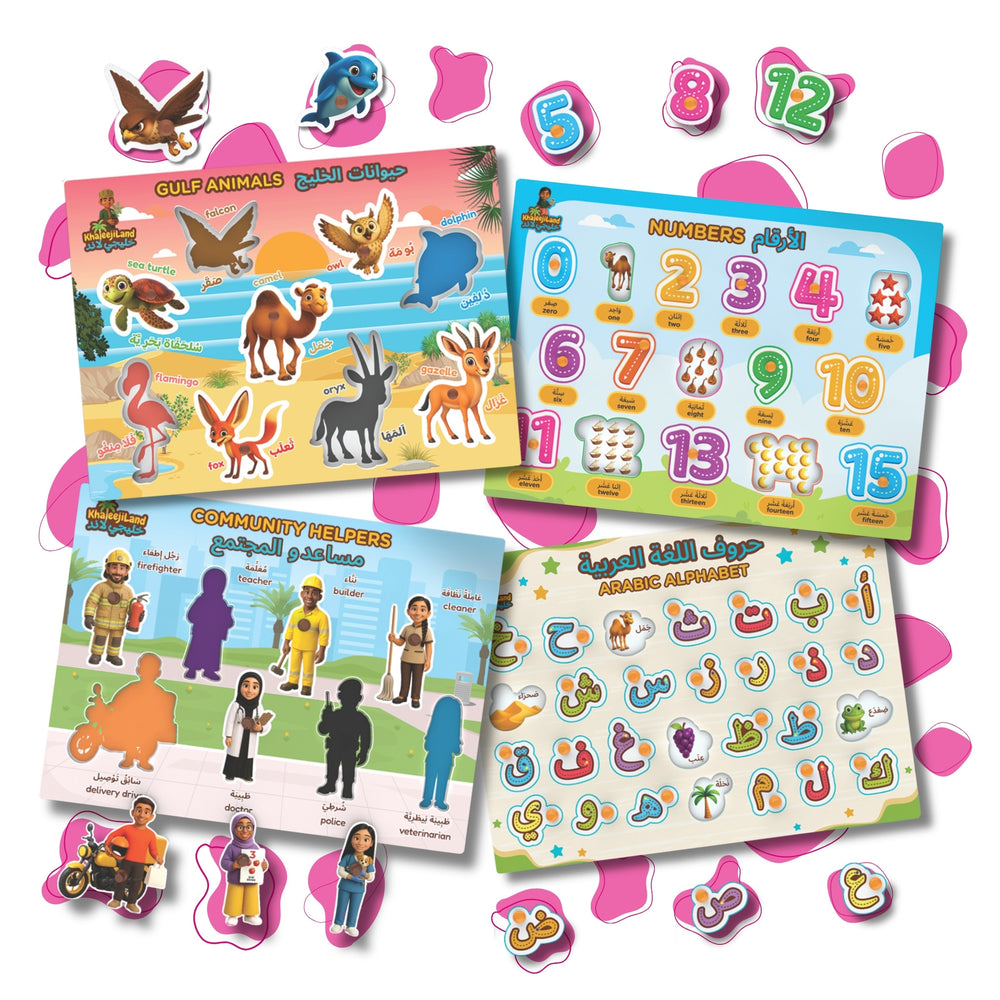
من متجر خليجي لانديمكن لبازل ثنائي اللغة أن يعمل دعامةً بصرية بسيطة لأن الطفل يستطيع الرؤية واللمس والتسمية والمطابقة في آن. فـبازل حيوانات الخليج الخشبي بالمقابض يقرن كل حيوان باسمه العربي والإنجليزي، فيمنحك سببًا سهلًا للحديث عن الكلمات أثناء اللعب. |

أسئلة شائعة
في أي عمر أبدأ باستعمال الدعائم البصرية مع طفلي؟
تستطيع البدء في سنوات الطفولة الأولى، حين يبدأ طفلك بملاحظة الصور والأشياء والملصقات البسيطة. أمّا للرضّع، فالأشياء الحقيقية والأغاني والإيماءات والكلمات المكرّرة أنفع من بطاقات الصور الرسمية. ولا حدّ أعلى أيضًا: فالدعائم البصرية تبقى مفيدة عبر سنوات المدرسة المبكرة وكلّما تعلّم طفل مفردات جديدة بلغة ثانية.
هل يبطّئ استعمال الصور قراءة طفلي أو يجعله يعتمد على الصور؟
لا يلزم أن تحلّ الصور محلّ الكلمات. فحين تُستعمل جيّدًا، تعين الأطفال على فهم المعنى أولًا، ثم ربط ذلك المعنى بالكلمة المنطوقة والمكتوبة. والدعائم البصرية تُدوَّر خارجًا طبيعيًّا حين يتقن الطفل كل طقم، فتبقى الصورة جسرًا إلى الكلمة لا بديلًا عنها.
هل أحتاج إلى شراء برنامج خاصّ لصنع دعائم بصرية في البيت؟
لا. فالأشياء الحقيقية وصور العائلة والملصقات المطبوعة أو المرسومة البسيطة تؤدّي معظم العمل، لأن الطفل يلتقيها في الحياة اليومية. وأدوات مجانية مثل كونيكت أبيليتي وكانفا تتيح لك صنع بطاقات صور نظيفة بلا كلفة إن فضّلت شيئًا مطبوعًا متّسقًا.
طفلي يخلط العربية والإنجليزية في الجملة نفسها. هل تساعد الدعائم البصرية في ذلك؟
خلط اللغات جزء طبيعي صحّي من النشأة ثنائي اللغة، لا مشكلة تُصلَح. وتستطيع الدعائم البصرية أن تقوّي برفق المفردات في أيّ لغة تُستعمل أقلّ، بمنح الطفل تدرّبًا أكثر على الكلمات التي يمدّ يده إليها أقلّ، دون جعل أيّ لغة تبدو تصحيحًا.
|
سارة معلّمة تربية خاصة مقيمة في الإمارات، حاصلة على ماجستير في التربية الخاصة من جامعة سيمونز، ولديها قرابة عقد من الخبرة في فصول أبوظبي، من السنوات المبكرة إلى ذوي الاحتياجات الخاصة. تكتب عن علم اللعب، والتعلّم ثنائي اللغة، ومساعدة الأطفال على الازدهار في فصول الإمارات وخارجها. |


