

What Is Play-Based Learning? An Educator’s Guide
Play-based learning is an approach where children learn through play that is purposeful and often guided by an adult, rather than through formal instruction alone. The child stays active, curious, and in charge of the activity, while the educator shapes it towards a learning goal. Decades of research link it to stronger language, early numeracy, and social and emotional development.
|
Key takeaways • Play-based learning means children learn through play, not instead of learning. It is a recognized, evidence-based approach, not a break from “real” teaching. • Research consistently finds the strongest results come from guided play, where an adult gently steers play towards a learning goal while the child stays in control. • There are several types of play, from free play to games with rules, and each supports different skills. • The EYFS framework used across many UAE schools treats play as essential to how young children learn. • The adult's job is to set up the environment, observe, and help move children's learning forward, not to direct every step. |
What does play-based learning actually mean?
Play-based learning is an educational approach in which play is the main way children learn. Children explore, experiment, solve problems, and make sense of the world through activities that feel like play to them, while those activities are designed or supported to build specific skills.
The phrase often causes confusion. Researchers note there is no single agreed definition, and the line between “play” and “learning” is drawn differently depending on the framework and the role given to the adult (Encyclopedia on Early Childhood Development). What most definitions share is that play-based learning is child-centered, hands-on, and developmentally appropriate, and that it treats play and learning as connected rather than opposed.
A simple example shows the difference. In a traditional lesson, a teacher might show children a video of a wheel rolling down a ramp, name the shape as a “circle,” explain that it is “round,” and tell them that being round is what lets it roll. In play-based learning, the children have their own ramp and a variety of shapes to test for themselves. They discover which ones roll and which do not, while the adult guides the activity, supplies the vocabulary, and helps them reach the same conclusion: a circle is round, so it rolls. In a way, it is teaching with the direct-instruction part removed. You go straight to the activity, and with the right support and a little interaction, children can reach the learning outcome through the play itself.
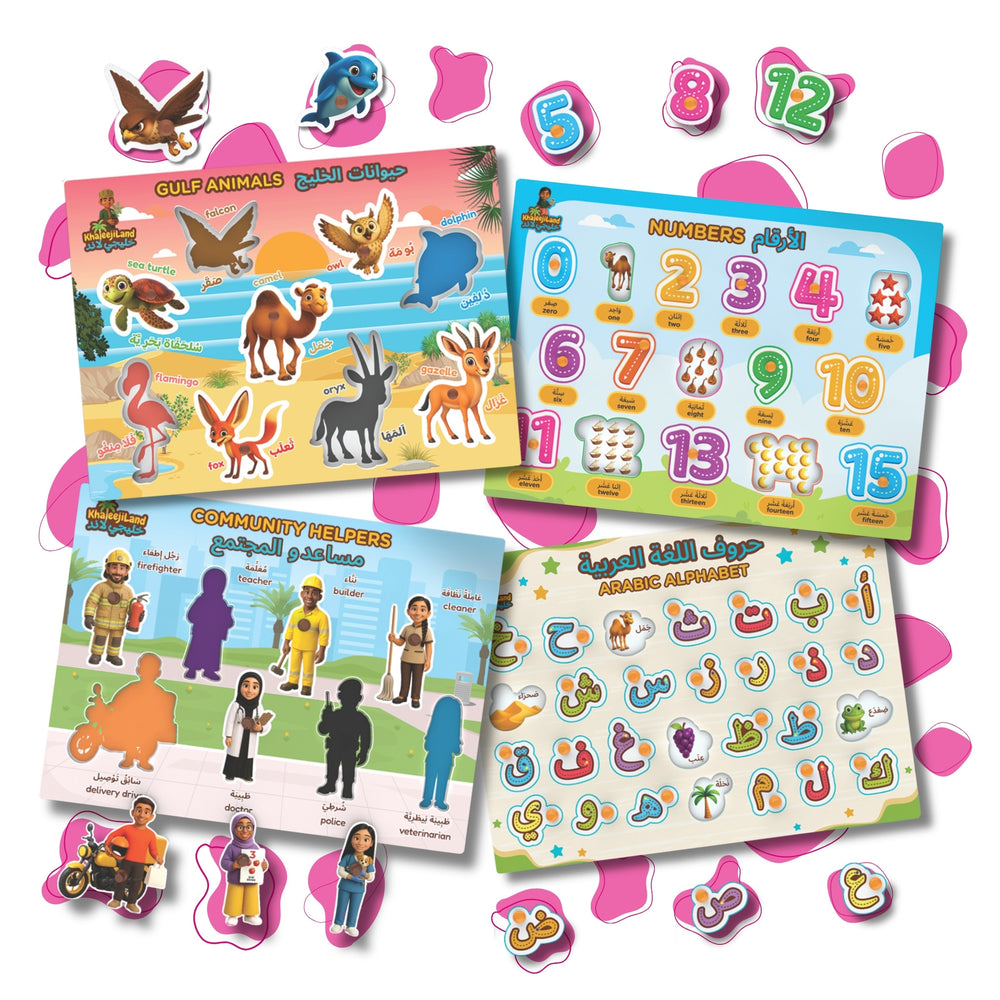
In my years teaching in Abu Dhabi classrooms, most of our learning resources were water tables, sensory tools, books, puzzles, and other toys. We rarely used worksheets, tests, or PowerPoints. To an untrained eye, it might have looked as though we were playing all day. To a careful observer, it was obvious the classroom was full of learning. The boy with the alphabet puzzle was in the middle of a robust phonics lesson. The little girl dunking cups at the water table was building her understanding of more, less, and volume. And the adults around them had carefully orchestrated all of it.
Is play-based learning actually backed by research?
Yes, though the evidence is more nuanced than headlines suggest. There is a growing and broadly consistent body of research linking play-based approaches to positive early learning outcomes, while researchers are honest that the evidence base has limitations and that not all types of play produce equal results.
The Education Endowment Foundation, which reviews education research for impact, reports that play-based learning shows a positive effect on early learning outcomes, with the clearest gains in nursery-age settings, and that most of the strong evidence concerns guided play rather than free play (Education Endowment Foundation). Positive impacts have been found across language, early literacy, and early numeracy.
One of the most influential studies in this area is the UK's Effective Provision of Pre-School Education (EPPE) project, which followed more than 3,000 children. It found that the most effective early years settings achieved a balance between adult-led activity and child-initiated play, and that high-quality adult-child interaction, what the researchers called sustained shared thinking, was central to children's progress (EPPE final report, UCL).
The takeaway for educators is not that play replaces teaching. It is that play and teaching work best together, with a skilled adult involved.
What is guided play, and why does it matter most?
Guided play is play that a child experiences as their own, but which an adult has gently shaped towards a learning goal. The child still leads, chooses, and explores. The adult sets up the materials, asks the occasional open question, and helps move the child's thinking forward at the right moment.
This distinction matters because the research points to guided play as the most effective form. Evidence from the science of learning suggests that discovery-based guided play can lead to greater learning than either completely free play or direct instruction on its own (NAEYC). Free play has real value for creativity, social skills, and wellbeing, but when the goal is a specific learning outcome, the adult's involvement is what makes the difference.
A simple classroom example makes the difference clear. Imagine a child building a tower of blocks. In free play, the adult would simply let them build. In guided play, an educator sits alongside and wonders aloud, “I wonder if it will still stand if we put the big block on top?” The child tests the idea, the tower topples, and a conversation about balance and weight begins, all inside an activity the child still feels is their own.
What are the different types of play?
Children play in many different ways, and each type supports different areas of development. Recognizing the types helps educators and parents offer a genuine range rather than repeating the same activity. Common categories include:
• Physical play: running, climbing, balancing, and movement that builds gross motor skills, coordination, and physical confidence.
• Constructive play: building and making with blocks, puzzles, or loose parts, supporting spatial reasoning, fine motor control, and problem solving.
• Dramatic or pretend play: role play such as running a pretend shop or clinic, which develops language, social understanding, and the ability to think symbolically.
• Games with rules: turn-taking games and simple board or matching games that build self-regulation, memory, and an early grasp of fairness and structure.
• Sensory and exploratory play: water, sand, and texture play that supports early scientific thinking through observation and cause and effect.
A child setting up a pretend shop, for example, is doing far more than playing. They are negotiating roles with a friend, using number language to “charge” for items, and practicing the social scripts of everyday life. A play money set turns that same game into hands-on early maths, which is one reason pretend play is so valued in early years classrooms.
It is also worth remembering that the materials themselves matter. Children tend to engage more deeply with toys and images that reflect their own world, which is the principle behind culturally responsive teaching. A child in the UAE counting with familiar local currency, or naming animals they might actually see around them, has an easier route into the learning than one working with unfamiliar references. We explore this further in why cultural representation in children's toys and learning materials matters.
FROM THE KHALEEJILAND SHOP
KhaleejiCash UAE Learning Money Set. A hands-on play money set that turns pretend shop play into early maths practice with familiar UAE currency. View the set. |

How does play-based learning fit UAE classrooms?
Play-based learning is already embedded in the frameworks many UAE schools follow. A large number of nurseries and early years settings across Dubai, Abu Dhabi, and Sharjah use the UK's Early Years Foundation Stage (EYFS), and others follow frameworks with similar principles.
The EYFS statutory framework is explicit that play is essential for children's learning and development, and that effective practice blends child-led play, adult modeling, and adult-guided learning (Department for Education, EYFS framework). In other words, the approach this article describes is not optional enrichment in these settings. It is the expected standard.
For UAE educators, the practical question is rarely whether to use play-based learning. It is how to do it well. That means knowing how to evidence the learning for school leadership and parents, and how to balance play against academic expectations and, in many settings, the demands of bilingual Arabic and English learning. Those are the questions the rest of this category sets out to answer.
Here is something that might sound strange coming from an educator. Even with all my training and experience, I often caught myself thinking, “I'm just playing. I need to actually teach these children.” It can be genuinely hard to let go of old mindsets and not feel guilty about playing during teaching hours. Often it was not until I sat down to record evidence, logging exactly what skills an activity had developed, how the child performed, and what the next steps were, that I saw how much that “play session” had given them. My students were engaged, they were making real progress, and still I doubted the approach, simply because of the lingering stigma around play. I hope that changes, because play can do so much.
What is the adult's role in play-based learning?
The adult's role is to be an intentional, observant partner. Not a director, not a bystander, and not an interviewer firing off questions. This is the part that takes real skill, and it is where play-based learning most often succeeds or fails.
Effective practice generally involves three things. First, preparing a rich environment: choosing materials and setting up spaces that invite the kind of play linked to a learning goal. Second, observing closely to understand where each child is and what would engage them and move their learning forward. Third, stepping in at the right moment through modeling, well-judged questions, and the kind of genuine back-and-forth conversation the EPPE research found so valuable. The aim is to balance child-led play with intentional adult input, rather than tipping fully into either a free-for-all or formal instruction.
That first element, the environment, has a name in EYFS settings: continuous provision. This is the carefully planned set of learning areas and resources available to children every day, such as books, blocks, puzzles, role-play, sand, water, and mark-making. The resources are not random toys scattered around the room. They are chosen deliberately to support specific areas of learning, from early literacy and maths to communication, physical development, and social skills. A helpful way to hold the two ideas together: continuous provision is the environment and the resources, while play-based learning is the approach, or pedagogy, that brings them to life.
Sustained shared thinking is worth understanding, because it is the heart of what skilled adult involvement looks like. The phrase simply means an adult and a child thinking through a problem together, each building on what the other says, rather than the adult testing the child for a correct answer. Picture a child at the water tray noticing that a plastic boat floats while a coin sinks. A closed question, “Does the coin sink?”, shuts the thinking down. Open, curious prompts keep it alive: “That's interesting. Why do you think the boat stays up but the coin goes down? What else might float?” The child predicts, tests, and rethinks, while the adult follows the child's reasoning instead of rushing to the answer. The thinking still belongs to the child. It simply goes further because an adult is thinking alongside them.
Knowing when not to step in matters just as much. If an adult jumps in too quickly, or fires off too many questions, the child stops problem solving and waits to be told what to do. Part of the skill is tolerating a little struggle, and a little silence, and letting the child reach for the next idea before offering a prompt.
Done well, all of this looks almost invisible. The children appear to be simply playing. The learning sits in the design of the activity, the questions chosen, and the moments the adult decides to step in or hold back.
What are the most common misconceptions about play-based learning?
Because the term is used loosely, several misunderstandings get in the way, with parents and sometimes with school leadership. Clearing them up tends to settle most of the worry.
The first is that play-based learning means no structure. It does not. A well-run play-based classroom is carefully planned: the materials, the groupings, the questions, and the learning goals are all deliberate. What the child experiences as free choice sits on top of a great deal of adult planning.
The second is that play is the opposite of “real” learning, as if play and academics were a straight trade-off. This is a false choice, and it is exactly what the research covered earlier pushes back on: the strongest outcomes come from combining playful, child-centered experiences with intentional teaching, not from choosing one over the other.
The third is that play-based learning means the adult steps back and lets children get on with it. Free play has its place, but as the evidence on guided play shows, it is usually the adult's active involvement that turns play into measurable learning. Stepping back entirely is not the goal.
The fourth is the belief that buying the right “educational” toy is enough on its own. This one is not limited to parents. Teachers fall into it too, filling a classroom with lovely resources that then sit unused, or never quite get built into the daily routine. A toy does not teach a child by itself. The learning comes from how it is used: the play around it, and an adult who joins in.
That said, the toy is far from irrelevant, and this is where a well-designed product earns its place. A good educational toy makes play-based learning easier. It gives the play a clear focus, lowers the effort needed to set up a meaningful activity, and points both child and adult towards the learning goal. The gap between a generic toy and a well-thought-out one is often the gap between a vague play session and a productive one.
It is also why we try not to leave parents and teachers to work it out alone. Every KhaleejiLand product page includes guiding questions and prompts to spark ideas for extending the learning, and our free activity library offers worksheets and activities that pair with our products when you want to take things further. You are not expected to figure it all out by yourself.
Frequently asked questions
Is play-based learning the same as free play?
No. Free play is one part of play-based learning, valuable for creativity, social skills, and wellbeing, but the approach also includes guided play, where an adult shapes the activity towards a learning goal. Research consistently finds guided play produces the strongest learning outcomes, while free play remains important for other reasons.
At what age should play-based learning start, and when does it stop?
Play-based learning is most associated with the early years, roughly from birth to around age six, the period covered by frameworks like the EYFS. Play keeps supporting learning well beyond that age, but it plays its biggest role in early childhood, when children build the foundations that later, more formal learning is built on.
Will my child fall behind academically if they learn through play?
Research actually suggests the opposite: learning through play may help your child achieve better outcomes, not worse. Large studies have found that children in high-quality play-based settings, with skilled adult involvement, make strong academic and social progress. The most effective approach is not play instead of teaching, but a balance of child-led play and intentional teaching from a knowledgeable adult.
How is play-based learning different from “learning through play” toys sold to parents?
Any toy can be labeled educational. Play-based learning is not about the product on its own, but about how a child plays with it and how an adult supports that play. A well-designed toy genuinely helps, but the learning comes from the play and the conversation around it, not from the toy alone.
|
Sara is a special educator based in the UAE, with a Master's in Special Education from Simmons University and nearly a decade in Abu Dhabi classrooms, from early years through special needs. She writes about the science of play, bilingual learning, and helping children thrive in UAE classrooms and beyond. |


